

Having people over should be something you look forward to—not something that leaves you exhausted before the first guest even walks through the door.
It’s easy to think that being a good host means making everything from scratch, having the house perfectly clean and spending half the gathering checking the oven or washing dishes.
But the gatherings people remember usually aren’t the perfect ones. They’re the ones where everyone felt comfortable, the food was good and the host actually had time to sit down and enjoy it.
With a little planning and a few shortcuts, you can create that kind of gathering without spending the entire day in the kitchen.
1. Plan the Gathering Around the Experience
Before deciding what to cook, think about how you want the gathering to feel.
Do you picture everyone sitting around the table? Eating casually outside? Watching a game? Spending the afternoon at the lake? Lingering over dinner?
Once you know that, plan food that fits the occasion.
A casual afternoon doesn’t need an elaborate meal. Burgers, a taco bar or a big sandwich platter might be exactly right.
The food should support the gathering—not become the gathering.
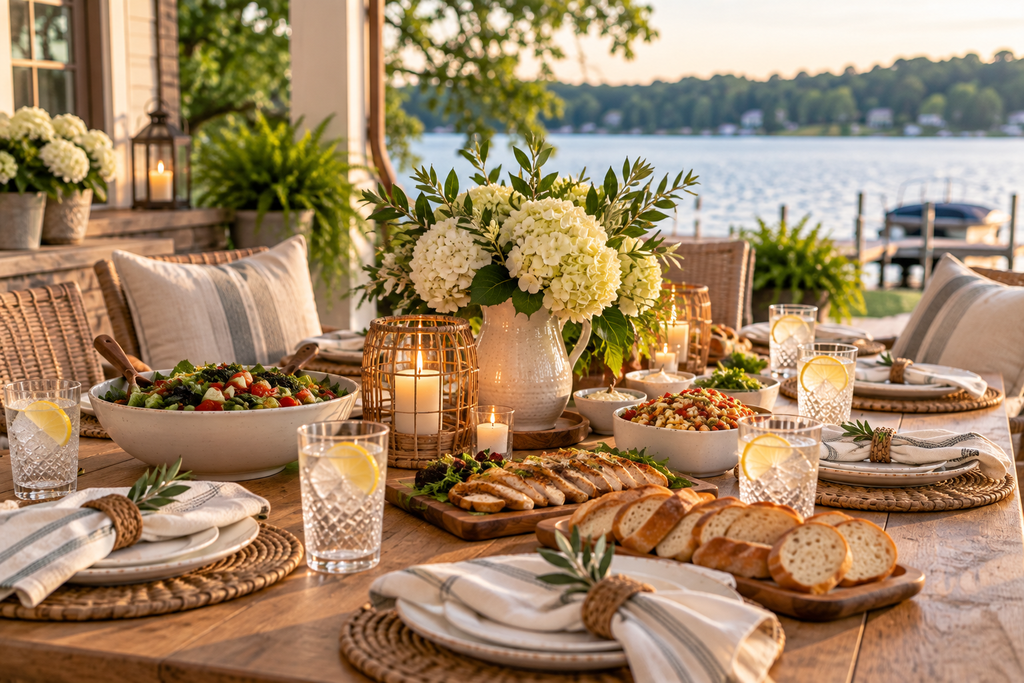
2. Choose a Main Dish That Doesn’t Need You
This may be my favorite hosting rule.
Choose a main dish that can be prepared ahead, cooked slowly or finished without a lot of last-minute attention.
Pulled pork, baked pasta, taco meat, shredded chicken, soups, chili and slow-cooker meals are all good examples.
The less you have to stand at the stove once guests arrive, the better.
SIMPLE HOSTING FORMULA
One easy main dish + two sides + bread + dessert
That’s enough.
You don’t need six side dishes just because company is coming.
3. Make Something Ahead
Look at your menu and ask yourself:
What can I completely finish the day before?
Desserts are often an easy choice. Pasta salads, dips, chopped vegetables, casseroles and many side dishes can also be prepared ahead.
Even if you can’t make the entire dish, do the prep.
Chop the vegetables. Mix the dressing. Set out the serving bowl. Measure the ingredients.
Every little job you do ahead is one less thing you’ll be doing when the doorbell rings.

4. Let the Store Help You
Not everything on the table needs to be homemade.
Buy the rolls. Pick up a good dessert. Use a bagged salad and add your own toppings. Start with prepared dip and put it into one of your pretty bowls.
You can even combine homemade and store-bought foods on the same menu.
No one needs to know which is which—and chances are, no one cares.
EASY UPGRADE
Turn a simple bagged salad into something that feels special by adding:
Mixed greens + sliced apples + dried cranberries + pecans + feta + bottled vinaigrette
Put it in a pretty serving bowl and you’re done.
5. Set Out Anything You Can Before Guests Arrive
I try to have the serving pieces figured out before I need them.
Decide which bowl will hold the salad, which platter you’ll use for the main dish and where everything will go.
Put serving spoons and tongs with the appropriate dishes.
You can even set the table the night before.
It sounds like a small thing, but searching for the right serving platter while dinner is getting cold is exactly the kind of last-minute stress we’re trying to avoid.

6. Create a Help-Yourself Drink Station
You shouldn’t have to get everyone a drink.
Set up one spot where guests can easily help themselves. Put out glasses or cups, ice, water and whatever other drinks you’re serving.
For a summer gathering, a big pitcher of iced tea or lemonade is easy and welcoming.
If children are coming, put their drinks somewhere they can reach safely.
Now when someone asks, “Can I get something to drink?” you can simply point them in the right direction.

7. Serve Food Family-Style or Buffet-Style
There is no rule saying the host needs to plate everyone’s dinner.
Put the food on the table and pass it around, or create a buffet where everyone can serve themselves.
Taco bars, baked-potato bars, sandwich boards and burger toppings are especially good for casual gatherings because guests can make exactly what they like.
They also work beautifully when you’re feeding adults and children at the same gathering.
BONUS: People tend to linger and talk when they’re helping themselves. That’s part of the fun.
8. Don’t Save Everything Until the Last Minute
Try to give yourself a 30-minute buffer before guests arrive.
The food doesn’t need you during those last 30 minutes if you’ve planned well.
Use that time to change your clothes, light a candle, turn on some music, pour yourself something to drink and take one last look around.
If someone arrives ten minutes early, you don’t want to answer the door holding a potato peeler.
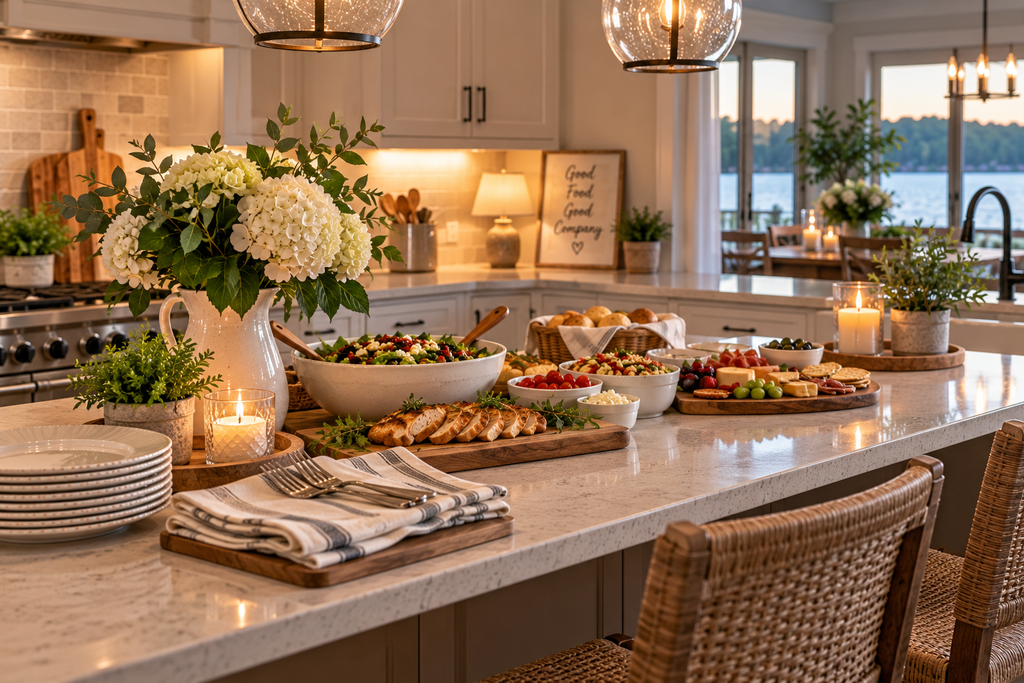
9. Clean As You Go—But Stop Once the Party Starts
While you’re cooking, fill the dishwasher, wipe counters and put ingredients away as you finish with them.
Starting the gathering with an empty dishwasher and a relatively clean kitchen makes cleanup much easier later.
But once people arrive, don’t spend the evening cleaning around them.
A few dirty dishes in the sink can wait.
Your guests came to spend time with you, not to admire an empty kitchen sink.
10. Sit Down
This one sounds obvious, but it may be the most important.
Once everyone has food and everything is going well, sit down.
Don’t keep looking for something else to do.
Don’t jump up every five minutes to refill something that isn’t empty.
And don’t worry about whether everyone has everything absolutely perfect.
Sit down. Eat your food while it’s warm. Join the conversation.
That’s the part of hosting that matters.
Be a Guest at Your Own Gathering
A welcoming home doesn’t require a perfect menu, a spotless kitchen or a host who spends the entire evening working.
Prepare what you can ahead. Take shortcuts where they make sense. Serve food people enjoy and then give yourself permission to stop fussing.
Because years from now, the people around your table probably won’t remember whether dessert was homemade. They’ll remember being together.
A Simple Hosting Timeline
I think this little section will make the post especially useful:
1–2 days before: Shop, make dessert, prepare make-ahead dishes and straighten the main areas of the house.
The night before: Set the table, choose serving dishes, prepare drinks and finish as much food prep as possible.
Morning of: Finish cold dishes, prepare the main dish and put drinks in the refrigerator.
1–2 hours before: Start anything that needs cooking, set out serving pieces and get the kitchen cleaned up.
30 minutes before: Stop working. Get yourself ready, turn on music, set out drinks and enjoy your home before everyone arrives.
When guests arrive: Be with them.
